
"It's even more beautiful in person": what that compliment costs a hotel
It is one of the comments I hear most often from hotel owners and managers. A guest arrives, walks through the property and says it is far more beautiful in person than in the photos. Sometimes the words are different, but the point is always the same: the photos don't do it justice.
It is received as a compliment, yet something about it feels wrong. And it should. What the guest has just described is a problem. The images show the space, but not what it feels like to be there. The cost of that problem is not paid by the guests who came. It is paid by the ones who never did, and as an owner or manager, you never hear about them. They are bookings that never happened, and there is no way of knowing how many there were.
The guest who never appears in any report
Whoever says that phrase booked in spite of the images, not because of them. Perhaps it was a recommendation, the location or a specific date. They arrived with modest expectations, and the place exceeded them.
But other people saw the same photos and the same video. They felt nothing in particular and kept searching. They didn't write, didn't ask, didn't leave a review. They simply chose somewhere else.
That guest never appears in any report. A booking system records who books, not who scrolled past. Web analytics can tell you how long someone stayed on a page. They cannot tell you what that person felt while looking at it. And in a place with character, what someone feels when they look is what decides the stay.
There is no precise way to measure that loss. That is why the comment matters so much. It is the only visible sign of something you cannot see.
Why hotel photos fall short
It is rarely a technical problem. The photographs may be well exposed, straight and sharp, and still say nothing. Or worse, they may look where there is nothing to see. They don't support the brand, and they don't convey what the place stands for.
An inventory is photographed, not a place
Room, bathroom, pool, dining room. Every space appears, but none of them tells you what happens there. They don't convey the comfort of staying in the place, or the sense of rest and disconnection that is precisely what sets it apart.
The convenient hour is chosen, not the hour of the light
Many places only make sense early in the morning or as the afternoon fades. Knowing when is a technical decision, and technique matters a great deal. But above all it is a decision about which story you want to tell, and about putting that knowledge at the service of the place.
What cannot be seen is missing
Water, silence, wind moving through the trees. In a film, sound is half of the place. The aim is to convey an emotion, and that happens when every sense is brought in with balance and subtlety. What we want to give the viewer, even for a brief moment, is the feeling of being there: the silence, the birdsong, an afternoon by the pool, a moment of disconnection.
The human scale is missing
An empty space shows square metres. An inhabited space shows how life is lived there. A table set for breakfast, someone reading by the window, a towel left on a lounger by the pool. These are small details, but they are what allow the viewer to imagine themselves there. It is not about filling the frame with posing models or staged scenes, which guests spot immediately. It is about suggesting a presence, and showing that the place is made to be lived in. When viewers can put themselves in the place of the person in the image, they stop seeing a space and start seeing their own stay.
The journey is lost
Guests don't experience isolated rooms. They experience an arrival, a path, a sequence of moments. The first glimpse from the entrance, gravel under the tyres, a door opening onto the courtyard, the light changing as they walk towards their room. All of that is part of what your place offers, and it rarely appears in its images. A gallery that jumps from bedroom to bathroom to pool shows separate pieces, but it doesn't reveal how they connect or what it feels like to move through them. Film has a clear advantage here, because it can follow that journey and give the place back its natural order. Photography can tell that story too, when it is conceived as a sequence rather than a catalogue.
Editing makes everything look the same
When every place receives the same colour treatment, they all end up looking alike. Skies of the same blue, interiors equally white, shadows that disappear. It has become a common style because it is quick and convenient, but it erases exactly what makes a place unique: the warmth of old stone, the green of a garden late in the day, the half-light of a room designed for rest. Post-production should not impose an aesthetic. It should respect the one the place already has. Ultimately, anyone looking at your images should recognise your place, not confuse it with the one next door.
The opposite mistake
The answer is not to embellish. An extreme wide angle, saturated colours, rooms that look twice their real size. They may attract bookings. But the guest arrives and finds something else, and that disappointment often ends up in a review, with no recommendation to follow.
The goal is not to make the place look more beautiful. It is to make it look like what it feels like to be there. When the images achieve that, the comment changes. Guests no longer say it is more beautiful in person. They say it is exactly as they imagined.
Four questions to ask about your own images
Can you tell what time of day each image was taken, or do they all look like the same moment?
If a past guest watched your film, would they recognise the place by its sound as well?
If you removed your name, could these images belong to another hotel?
Is there a single image that shows what happens in your place, not just what it looks like?
Listening to the comment
When I work on a place, the camera does not come first. What comes first is understanding what someone feels when they arrive for the first time, and finding a way for that feeling to exist before the journey. At Torres de Selma, for example, the sound of birds and frogs mattered as much as the image.
The next time a guest says it is more beautiful in person, it is worth hearing it for what it is: a clue about the guests who never came.
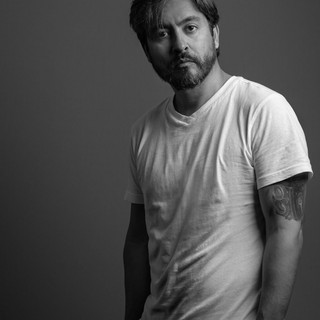
Humberto Segura leads DOMUM, a photography and video studio for high-end real estate and hospitality, based in Catalonia, Spain.
Comments